|
Behaviour Challenges
|
Possible Reasons for Behaviour Challenges
|
Social Stories
|
|
What Is It?
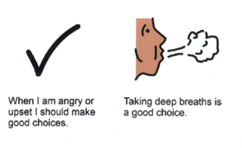
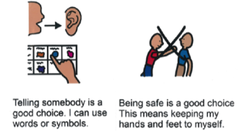
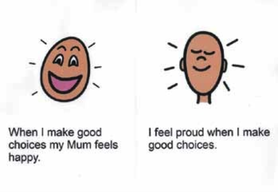
Social stories involves the reading of a story that includes illustrations or pictures to teach the student appropriate behaviour for a variety of social situations.
This could include:
|
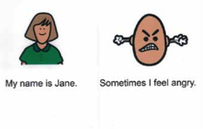
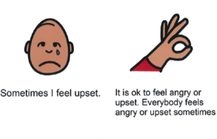
Down Syndrome Association of Qld Inc. Retrieved July 20, 2015 from, http://www.dsaq.org.au/Default.aspx?PageID=13536817&A=SearchResult&SearchID=638933&ObjectID=13536817&ObjectType=1
|
|
The Purpose & Benefits
|
|
|
How to Use It
|
|
References
Buckley, S., Bird, G., & Sacks, B. (2002). Social development for individuals with Down syndrome - An overview. Down Syndrome Issues and Information.
Coe, D. A., Matson, J. L., Russell, D. W., Slifer, K. J., Capone, G. T., Baglio, C., & Stallings, S. (1999). Behavior problems of children with down syndrome and life events. Journal of Autism and Developmental Disorders, 29(2), 149-156. doi:10.1023/A:1023044711293
Georgakopoulou, A. (2014). Stories in social organization. Journal of Comparative Research in Anthropology and Sociology, 5(1), 1-3.
Loveland, K. A. (1990). Narrative story telling in autism and down's syndrome. British Journal of Developmental Psychology, 8(1), 9.
Loveland, K. A., & Tunali, B. (1991). Social scripts for conversational interactions in autism and down syndrome. Journal of Autism and Developmental Disorders, 21(2), 177-186. doi:10.1007/BF02284758
McCarthy, J. (2008). Behaviour problems and adults with down syndrome: Childhood risk factors. Journal of Intellectual Disability Research, 52(10), 877-882. doi:10.1111/j.1365-2788.2008.01104.x
Coe, D. A., Matson, J. L., Russell, D. W., Slifer, K. J., Capone, G. T., Baglio, C., & Stallings, S. (1999). Behavior problems of children with down syndrome and life events. Journal of Autism and Developmental Disorders, 29(2), 149-156. doi:10.1023/A:1023044711293
Loveland, K. A. (1990). Narrative story telling in autism and down's syndrome. British Journal of Developmental Psychology, 8(1), 9.
Loveland, K. A., & Tunali, B. (1991). Social scripts for conversational interactions in autism and down syndrome. Journal of Autism and Developmental Disorders, 21(2), 177-186. doi:10.1007/BF02284758
McCarthy, J. (2008). Behaviour problems and adults with down syndrome: Childhood risk factors. Journal of Intellectual Disability Research, 52(10), 877-882. doi:10.1111/j.1365-2788.2008.01104.x
